Three credit-rebuild loan types, plain English.
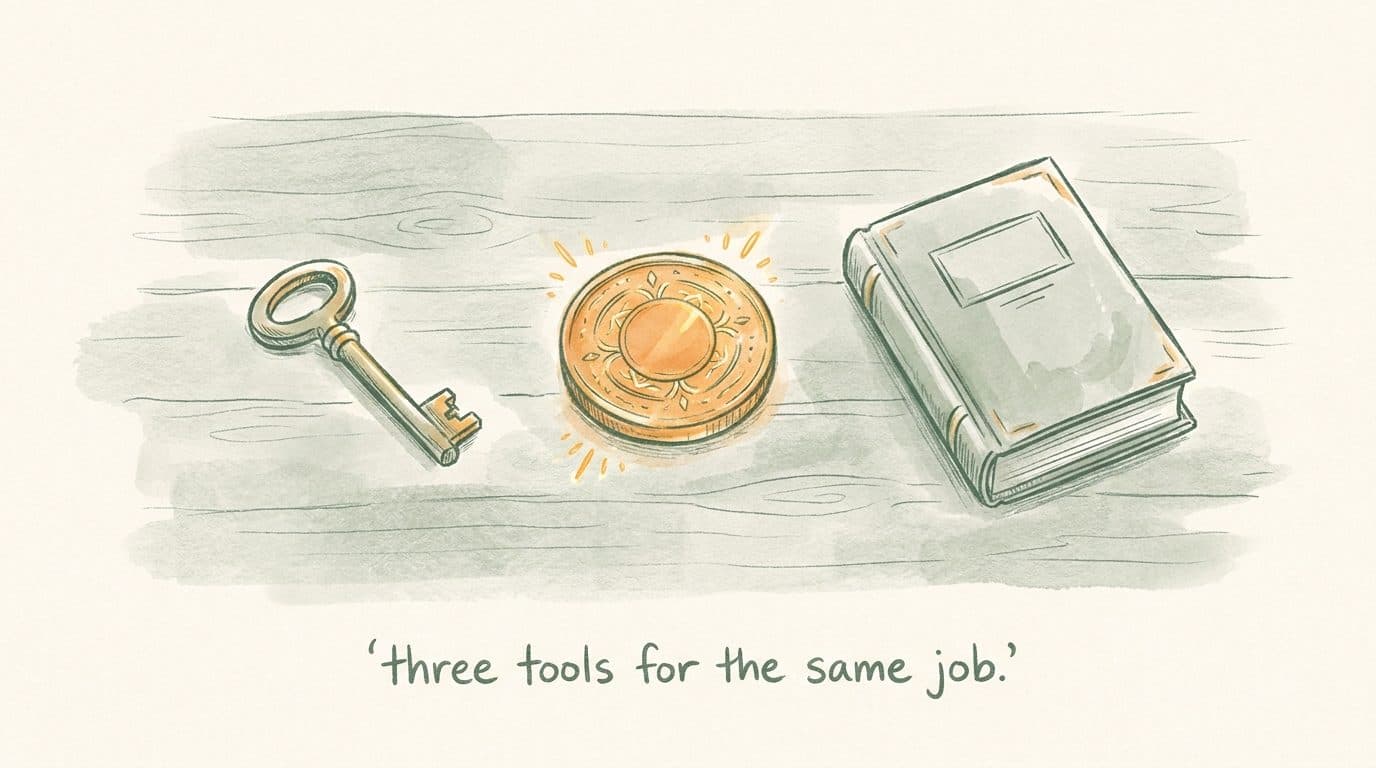
Three tools for one job
If your credit is bruised and you're looking at rebuilding it, you'll come across three categories of product. The names get blurred in marketing materials. The differences matter.
This piece walks through each one, in plain English, with the honest tradeoffs.
1. Secured credit cards
A secured credit card looks and works exactly like a regular credit card, with one difference: you put down a deposit when you open it, and that deposit becomes your credit limit. Put down $500, you get a $500 limit.
The deposit isn't a fee — it's collateral. It sits in a separate account. If you ever miss enough payments that the lender forecloses, they take the deposit. Pay the card off, close it in good standing, and you get the deposit back.
Why it works for rebuilding: secured cards report to the credit bureaus monthly just like any other card. Pay on time, keep your balance low, and your credit history starts showing months of clean activity. The bureau doesn't differentiate "secured" from "unsecured" in your file — to the credit-scoring model, it's just a credit card account.
The honest tradeoffs:
- Your money is tied up. A $500 deposit might be cash you'd rather use elsewhere.
- Some have annual fees. Cheaper ones don't. Shop around.
- The limit is small. That's both protection (you can't get in trouble with $500) and limitation (it's only $500).
- Approval is usually generous, because the deposit eliminates the lender's risk.
Who it fits best: someone with $300–$500 to set aside, who wants 12+ months of clean credit-card history before they apply for anything bigger. The patient option.
2. Credit-builder loans
A credit-builder loan is the most counterintuitive product in personal lending — and one of the most useful when your credit is bruised.
Here's the structure: you borrow, say, $1,000. The lender doesn't give you the money. They put it in a locked savings account. You make monthly payments — principal plus a small amount of interest — for the loan term, usually 12–24 months. At the end, you get the $1,000 (minus interest).
What you really paid for is twelve to twenty-four months of on-time loan payments reported to the credit bureaus.
Why it works for rebuilding: payment history is the biggest single factor in your credit score. A credit-builder loan creates payment history on demand. It's specifically designed for this purpose.
The honest tradeoffs:
- You don't get cash up front. If you need money now, this isn't the right product. It's for credit-building only.
- Interest does cost something. It's usually small — sometimes under $100 over a 12-month term — but it's a real cost.
- You have to make the payments. A missed payment on a credit-builder loan damages your credit the same as any other missed payment.
Who it fits best: someone who's already paying their other bills on time but has a thin credit file, or someone rebuilding after a major event. The deliberate option.
3. Small installment loans
These are conventional personal loans, but in smaller amounts and with criteria designed for the bruised-credit market.
You borrow a sum (typically $1,000 – $5,000), receive it as cash in your bank account, and repay it over 12–36 months in fixed monthly payments. The interest rate will be higher than what a prime borrower would pay — typically in the high teens to mid-thirties APR — but the payment schedule is predictable.
Why it works for rebuilding: like a credit-builder loan, every on-time payment is reported to the credit bureaus, building your payment history. Unlike a credit-builder loan, you actually get the cash. So this product double-duties: it covers a real need (car repair, dental work, debt consolidation) and builds credit while you pay it back.
The honest tradeoffs:
- Higher rates than prime. You're paying a credit-risk premium. Make sure you understand the total cost — the lender must disclose it.
- Lender selection matters a lot. This category includes reputable lenders and predatory ones. Look for clear disclosure, no prepayment penalty, and APRs that aren't in triple digits.
- You have to make the payments. Same as any loan — a missed payment hurts.
Who it fits best: someone with an actual financial need and the income to repay. Most people we match end up here, because they came to us with a real expense, not just a credit-building project.
Which one is right for me?
The honest answer is: it depends on what you actually need.
- If you need cash now and can afford payments → small installment loan.
- If you don't need cash but want to build credit history → credit-builder loan.
- If you want to learn good credit-card habits and you have a deposit available → secured card.
Many people end up doing more than one of these over time. Secured card first, paid off and closed eighteen months later. Small installment loan when an unexpected expense hits. Maybe a credit-builder loan later if the score still has room to climb.
There's no shame in starting small. There's also no shame in needing more than one tool over the course of a rebuild.
What we'd avoid
A few products that sound similar but aren't on this list, and for good reason:
- Payday loans. Different category. Different math. Different ethics. Avoid.
- Title loans. You don't want your car as collateral on a short-term loan. Avoid.
- "Guaranteed approval" loans with no credit check. No reputable lender works this way. The unreputable ones charge a fortune.
- Credit-repair services that charge upfront. Anything you'd pay them to do, you can do yourself for free.
If you want to see which of the three real products fit your situation, the Fresh Start eligibility check sorts that out in about four minutes — and our partner lenders only show you offers, never make you commit.